

- What it is: Digital marketing for ICT infrastructure companies is the coordinated use of branding, content, search (SEO and GEO), performance advertising and PR to help manufacturers, distributors and system integrators get found, trusted and shortlisted by B2B technology buyers.
- Why it matters in India: Networking, cabling, server, storage, data centre and connectivity products are sold B2B, usually through national, regional and local distributors. The brand sets the promise; the distributor delivers it at the buyer’s doorstep.
- The overlooked insight: Most marketing budgets sit with the manufacturer, while much of the local buying conversation sits with the distributor. Marketing that ignores that gap leaks demand.
What works: A shared brand story, technical content buyers can actually use, search and AI-search visibility, targeted performance campaigns, strategic PR, and a partner-ready toolkit so every distributor can show up well online.

Here is a scene that plays out in Indian companies every week. A hospital group is expanding to a third campus. Somebody in IT has a spec sheet. Somebody in finance wants three quotes. Procurement is asking about delivery timelines and warranty terms. The CFO has one question: “Who do we call when something fails at 2 a.m.?”
Notice what is missing from that story. Nobody is browsing a retail shelf. Nobody is swayed by a discount banner. The buying decision runs through a small committee, a long evaluation, and a trusted local partner, very often a distributor or system integrator who knows the building, the vendors, and the people.
That is the world of ICT infrastructure, and it is the world this article is about. If you manufacture, distribute or resell networking, cabling, server, storage or data centre products in India, or sell connectivity and cloud services, the marketing playbook that works for consumer brands will not work for you. Something more deliberate will. We will walk through it together: what the sector really is, how the manufacturer–distributor–buyer chain works, where the friction sits, and how an integrated digital marketing approach can turn that friction into growth.
What ICT infrastructure actually is (and why everything else depends on it)
ICT stands for Information and Communication Technology. ICT infrastructure is the physical and virtual foundation that lets data move, get stored and get processed: the cables in the walls, the switches and routers that direct traffic, the servers and storage that hold applications, the data centres that house them, and the connectivity and cloud services that tie it all together.
Think of it as the plumbing and wiring of the digital economy. Banks, hospitals, factories, schools, e-commerce firms and government departments run on software, but that software runs on this layer. When it works, nobody notices. When it fails, everything stops. That is exactly why the companies that build, supply and maintain it carry so much weight.
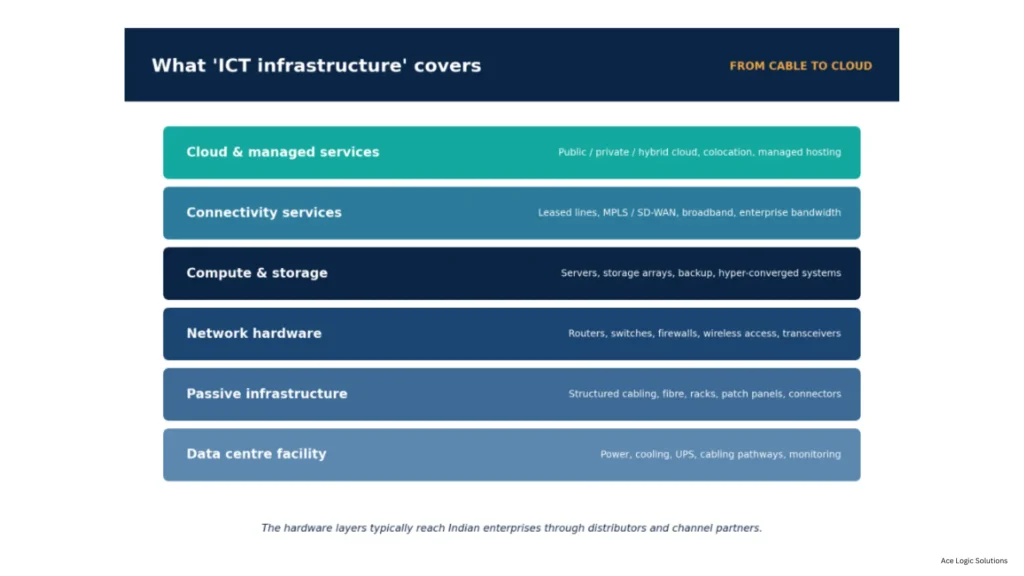
Figure 1: The ICT infrastructure stack, from the data centre floor to cloud services.
The product and service verticals this article focuses on
| Layer | Typical products and services | Who usually sells it in India | What buyers worry about |
| Data centre components | Racks and enclosures, power distribution, UPS, cooling, cable management, monitoring | OEMs, national distributors, specialist integrators | Uptime, power efficiency, compatibility, lead times |
| Passive networking and cabling | Structured copper and fibre cabling, patch panels, connectors, trunking | OEMs, distributors, regional resellers, installers | Certified quality, warranty, genuine product, installation standards |
| Active networking hardware | Routers, switches, firewalls, wireless access points, transceivers | Global brands via national distributors and partners | Performance, security, support, licensing clarity |
| Servers and storage | Rack and tower servers, storage arrays, backup appliances, hyper-converged systems | OEMs, value-added distributors, system integrators | Total cost of ownership, scalability, service response |
| Connectivity services | Leased lines, enterprise broadband, MPLS and SD-WAN, managed network services | Telcos, ISPs, managed service providers, resellers | Reliability, SLAs, speed of provisioning |
| Cloud services | Public, private and hybrid cloud, colocation, managed hosting and migration support | Cloud providers, MSPs, data centre operators, partners | Data security, compliance, cost predictability, migration risk |
Table 1: ICT infrastructure verticals, who sells them and what B2B buyers worry about.

Why this sector is almost entirely a B2B story
This article deliberately leaves out consumer gadgets. A home Wi-Fi router bought from an online marketplace is a different game. The categories above are bought by organisations, for organisations, and that changes the marketing rules in four ways.
- Purchases are considered, not impulsive. Evaluation can run for weeks or months, and many deals begin as projects, tenders or RFQs.
- Several people influence the decision. Technical teams shortlist, finance tests the numbers, procurement checks risk and terms, and leadership signs off.
- Trust outweighs clever advertising. A buyer taking a risk on mission-critical infrastructure looks for proof, references and a partner who will pick up the phone.
- The relationship rarely ends at delivery. Support, upgrades and renewals mean the first sale is often the start of a long account.
For marketers this is good news in one way: the buyer is actively researching. The question is whether your brand, or your distributor, is visible and credible when that research happens.

The distributor: the most important marketing asset you may be ignoring
Here is the angle that most marketing content on this sector skips. Many global ICT infrastructure players do not sell directly in India. They work through national distributors, who in turn work through regional distributors, resellers and system integrators. Industry alliances and certification programmes add another layer of partnership.
This is not a side detail. In many territories the distributor holds the keys. They stock the product, extend credit, run the local relationships, handle installation or refer it, and often decide which brand gets the first recommendation when a customer says, “What should we use?”
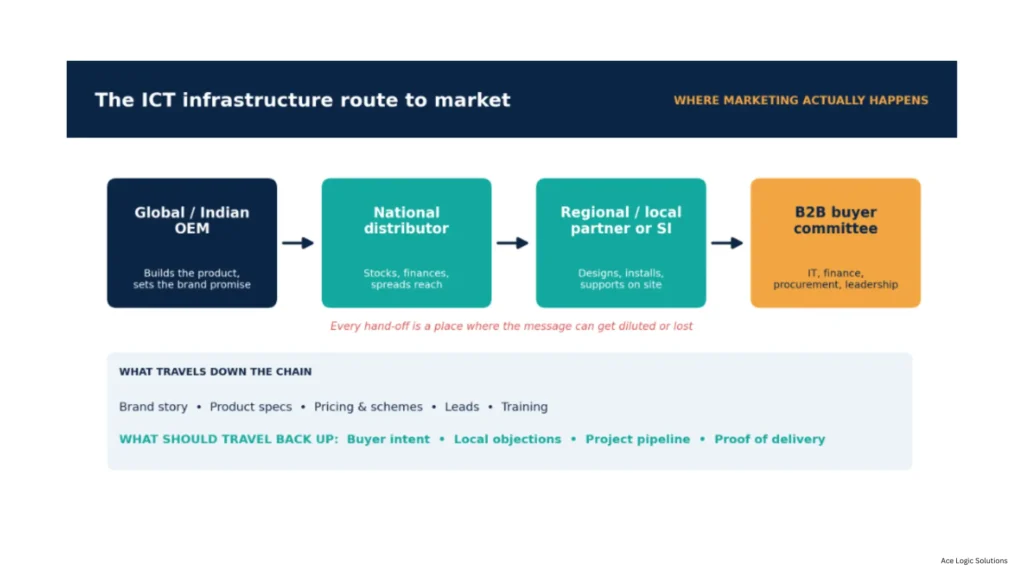
Figure 2: The route to market. Each hand-off is a chance for the brand message to be sharpened or diluted.
Let us look at what that means from each side of the table.
If you are a manufacturer or OEM
Your brand promise has to survive three or four hand-offs. By the time it reaches the buyer, it may have been trimmed into a price list and a spec sheet. Meanwhile you may have little visibility into who is searching, what they are asking and where deals are being lost. Marketing that only speaks to end buyers misses the partner who actually influences the shortlist.
If you are a distributor or channel partner
You carry multiple brands, and so do your competitors. Buyers often know the manufacturer’s name but not yours. Your expertise, your service record and your local presence are real advantages, but if they are invisible online, a buyer researching at midnight will never see them. Your brand is competing for trust at the very moment buyers choose who to call.
| The mindset shift
Stop treating distributors as a pipe that carries product. Treat them as a marketing channel and a credibility partner. Equip them, feature them, and measure success jointly. The brands that do this tend to travel further with less friction. |
Who actually makes the decision: the B2B buying committee
In ICT infrastructure the buyer is a group, and each member asks a different question. A message that excites the engineer can leave the CFO cold, and the reverse is also true. The distributor often sits in the middle, translating between them.
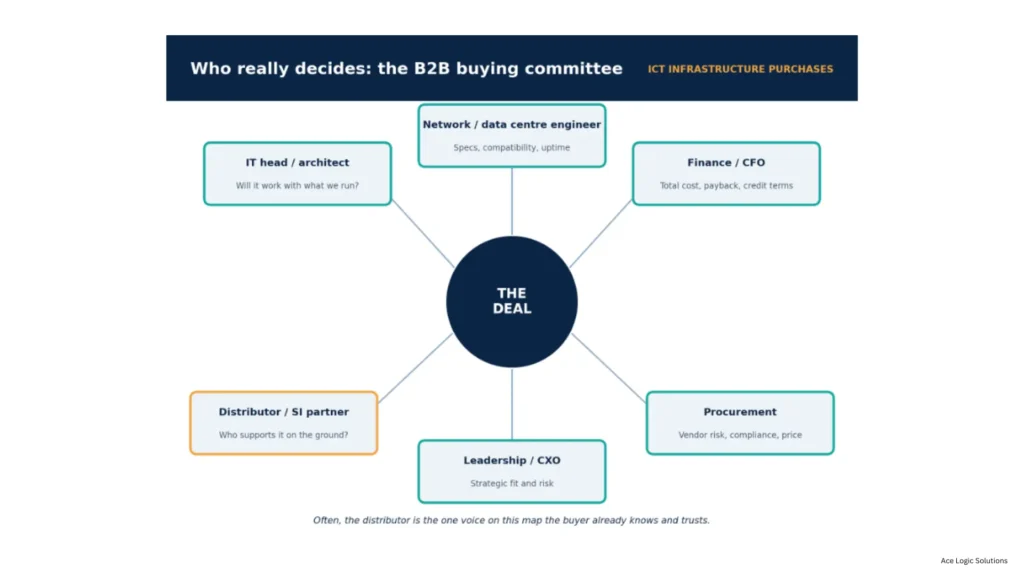
Figure 3: The buying committee. The distributor or integrator is a voice on the committee, not just a supplier.
| Role | What they care about | Where they research | Content that helps | Where the distributor fits |
| IT head / architect | Fit with existing systems, roadmap, risk | Search, vendor sites, peers, LinkedIn | Architecture guides, compatibility notes, comparison pages | Recommends, validates, designs |
| Network or data centre engineer | Specs, performance, uptime, ease of deployment | Technical docs, forums, YouTube, search | Datasheets, how-to guides, configuration explainers | Provides hands-on support and sample units |
| Finance / CFO | Total cost, payback, credit terms, budget fit | Internal reports, peer advice | TCO explainers, ROI summaries, financing options | Offers credit, bundles and clear quotes |
| Procurement | Vendor reliability, compliance, delivery, price comparison | Directories, RFQ platforms, search, references | Certifications, case studies, warranty details, vendor profiles | Fast, clean quotations and delivery commitments |
| Leadership / CXO | Business continuity, reputation, strategic fit | Industry media, peers, events, LinkedIn | Thought leadership, customer stories, press coverage | Relationship and escalation point |
Table 2: Buying committee roles, concerns, research habits and content needs.
The practical lesson is simple. One piece of content will not do the job. You need a content system that answers the engineer, the CFO and the procurement head in their own language, and that your distributors can pick up and use without rewriting it.
The real-world challenges, and how brand and digital marketing help
Every ICT infrastructure seller we speak with recognises most of the problems below. The table maps each one to the people who feel it and to the marketing response that helps.
| Challenge | Who feels it most | What it looks like on the ground | How brand and digital marketing help |
| Commodity perception and price-led selling | Both | Buyers compare line items and push for discounts | Brand positioning around reliability, support and outcomes; case studies that show value beyond price |
| Distributors are invisible online | Distributors | Strong local relationships but a thin website and few reviews | Local landing pages, Google Business profiles, partner profiles and shared content kits |
| Message dilution across channel tiers | OEMs | The brand story turns into a price list | A brand toolkit, approved messaging and co-branded assets that partners can use as-is |
| Long, multi-stakeholder buying cycles | Both | Leads go cold between enquiry and decision | Nurture content by role, retargeting, email and WhatsApp follow-ups, LinkedIn presence |
| Lead ownership confusion | Both | OEM and distributor argue over who generated an enquiry | Shared tracking, lead routing rules and joint reporting built into campaigns |
| Technical complexity | OEMs, partners | Specs are hard for non-technical buyers to grasp | Plain-language explainers, visuals, comparison pages and short videos |
| Trust issues: grey market, counterfeits, after-sales worries | Both | Buyers fear unauthorised stock or weak support | Authorised-partner pages, certification badges, warranty clarity, reviews and PR |
| Project and tender-driven, lumpy demand | Distributors, integrators | Quiet quarters followed by sudden RFQs | Always-on search and content presence so you are shortlisted when the project appears |
| Limited insight into buyer intent | OEMs | Little visibility into what buyers search for or where deals stall | Search data, analytics and CRM integration that feed back to the channel |
Table 3: Common B2B challenges in ICT infrastructure and the marketing response to each.
The service lines that make up an integrated approach
None of the following works well alone. Together, and tuned to the channel, they reinforce each other. For each service line below we show what it does for ICT infrastructure marketing, followed by a table that compares the benefit for manufacturers and for distributors, aligned to the opportunities and challenges above.
Branding and positioning
In a category where products can look similar on paper, brand is what makes a buyer comfortable choosing you. For an OEM that means a clear position (for instance, “reliable infrastructure with strong local support”) and a visual and verbal identity that stays consistent across every partner. For a distributor, it means standing for something specific: a region, an industry vertical, a service standard, or a technical specialism.
| Lens | For manufacturers / OEMs | For distributors and partners |
| Opportunity it opens | A recognisable brand that partners are proud to represent; stronger recall during shortlisting. | A distinct identity beyond “reseller of many brands”; credibility with larger accounts. |
| Challenge it eases | Message dilution across tiers; being seen as interchangeable with competitors. | Low recall and commodity pricing pressure. |
| Practical starting point | Publish a partner brand toolkit: logo rules, approved messaging, co-branding templates, sales presentation. | Define a niche (vertical, region or service strength) and express it consistently on web, profiles and proposals. |
Content marketing and social media communication
Content is how technical credibility reaches people who have not met you yet. Think application guides, deployment checklists, comparison pages, short explainer videos, customer stories and answers to the questions engineers and finance teams actually ask. On social media, LinkedIn is typically the main arena for B2B technology: leadership voices, project stories and partner spotlights are all fair game. YouTube and WhatsApp-based sharing often support the technical and follow-up side.
| Lens | For manufacturers / OEMs | For distributors and partners |
| Opportunity it opens | Authority with technical and economic buyers; a content library partners can reuse. | Local proof of expertise; content that makes you the helpful voice in your territory. |
| Challenge it eases | Complex products that are hard to explain; long cycles with no engagement in between. | Invisibility between projects; weak differentiation. |
| Practical starting point | Build a role-based content map (engineer, finance, procurement, CXO) and publish two or three strong pieces a month. | Share installation stories, before-and-after photos, short tips and co-branded vendor content on LinkedIn. |
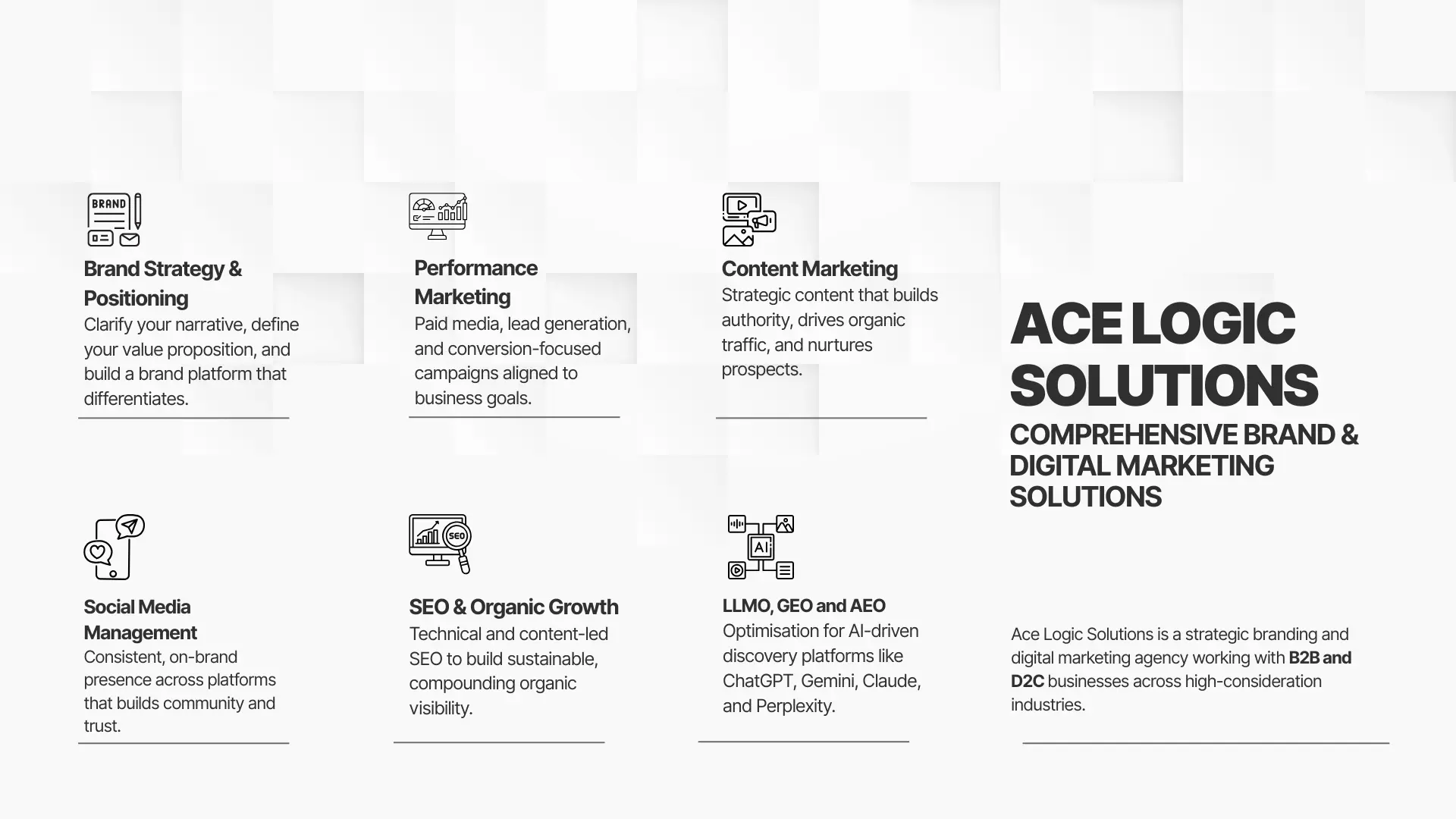
SEO and GEO (generative engine optimisation)
This is where buyers are increasingly starting. They type a question into Google, or ask ChatGPT, Gemini, Perplexity or Claude something like “best structured cabling supplier in Pune” or “how to choose a server for a mid-sized firm”. Traditional SEO helps you appear in search results. GEO, sometimes called LLM optimisation or answer-engine optimisation, helps AI assistants understand, trust and mention you in their answers.
Nobody can guarantee a citation from an AI assistant, and anyone who does is overselling. What you can do is make your content easy to understand and hard to ignore: answer questions directly and early, keep facts about your company consistent across the web, use clear headings and tables, add structured data, earn mentions on credible third-party sites, and publish real expertise with named authors.
| Lens | For manufacturers / OEMs | For distributors and partners |
| Opportunity it opens | Visibility on technical and comparison searches; a growing presence in AI-generated answers. | Local discovery (“near me”, city and industry searches); a path to compete with larger names. |
| Challenge it eases | Dependence on partner marketing for discovery; little control over how the product is described online. | Search results dominated by manufacturer sites and marketplaces. |
| Practical starting point | Create product-category and use-case pages with answer-first summaries, FAQs and schema markup; keep brand facts consistent everywhere. | Build city and vertical landing pages, optimise Google Business profiles and gather genuine customer reviews. |
Performance marketing
Paid campaigns on search, LinkedIn and display let you reach buyers when a project is live. In a sector with lumpy, project-driven demand, that precision matters. The best campaigns focus on high-intent searches, specific accounts and retargeting, rather than broad reach. Landing pages should make it easy to request a quote, a datasheet or a call.
| Lens | For manufacturers / OEMs | For distributors and partners |
| Opportunity it opens | Reach target industries and accounts quickly; generate measurable enquiries to route to partners. | Capture enquiries in a defined territory; supplement slow periods with active demand. |
| Challenge it eases | Slow organic ramp-up; limited lead data. | Tight margins that make broad campaigns uneconomical. |
| Practical starting point | Run a small, tightly targeted search and LinkedIn campaign with a dedicated landing page and lead-routing rules. | Co-fund campaigns with the OEM through marketing development funds and geo-target tightly. |
Strategic PR and thought leadership
PR in B2B technology is not about noise. It is about credibility with the people who influence the buying committee: trade media, industry associations, analysts and conference organisers. Contributed articles, expert commentary, award recognition and event participation all help. They also serve a GEO purpose, because third-party mentions are a signal that AI systems and search engines use to judge who is a credible name.
| Lens | For manufacturers / OEMs | For distributors and partners |
| Opportunity it opens | Third-party validation; visibility with CXOs and policymakers; stronger reputation for new launches. | Local and industry credibility; recognition as a go-to partner. |
| Challenge it eases | A new or lesser-known brand entering a trust-driven market. | Being overshadowed by global brand names. |
| Practical starting point | Place expert commentary in trade media and secure speaking slots at industry events. | Publish partner milestones, certifications and project wins; contribute to regional business media. |
Partner enablement and marketing technology
This is the piece that holds the rest together. It covers shared dashboards, a partner content portal, CRM integration, lead routing, WhatsApp and email automation, and basic training so that partners can use what the brand creates. Without it, even good marketing stays stuck at headquarters.
| Lens | For manufacturers / OEMs | For distributors and partners |
| Opportunity it opens | Visibility into what partners do with leads; consistent execution across territories. | Ready-made assets and tools without needing a large marketing team. |
| Challenge it eases | Lead ownership disputes; no feedback loop from the field. | Limited bandwidth and skills for digital marketing. |
| Practical starting point | Create one portal for assets, a lead-routing policy and a quarterly joint review. | Adopt the OEM toolkit, set up a simple CRM and respond to enquiries quickly. |
How the services line up against opportunities and challenges
| Service line | Primary job | Where it works hardest | Challenge it eases most | Opportunity it opens most |
| Branding | Create trust and recall | Awareness and shortlisting | Commodity perception, message dilution | Premium positioning, partner pride |
| Content and social | Educate and stay present | Evaluation and nurture | Complexity, long cycles | Authority across the committee |
| SEO and GEO | Be found and cited | Awareness to shortlisting | Invisible distributors, unknown intent | Always-on discovery, AI answer visibility |
| Performance marketing | Capture live demand | Shortlisting and decision | Lumpy demand, slow follow-up | Faster pipeline for target accounts |
| Strategic PR | Build third-party credibility | Awareness and advocacy | Trust gaps, grey-market concerns | Leadership visibility, brand authority |
| Partner enablement | Align the channel | All stages | Dilution, lead disputes | Consistent, scalable execution |
Table 4: The integrated service lines at a glance.
Putting it together: the integrated engine
The point of an integrated approach is that each service feeds the others. Content gives search something to rank. Search and PR build credibility that makes paid campaigns convert better. Branding keeps all of it recognisable. Partner enablement ensures it works in the field, not just on a slide.
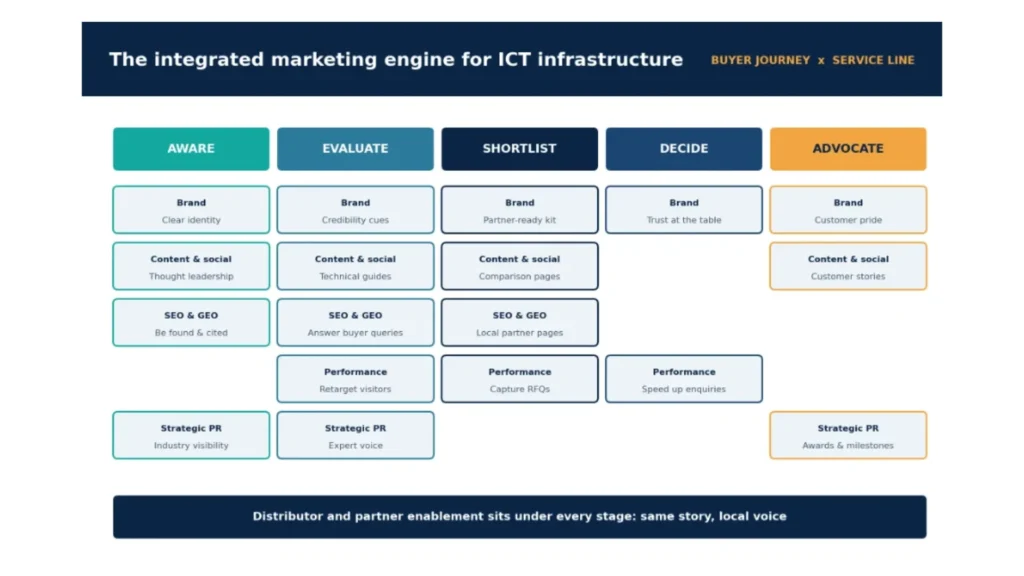
Figure 4: Service lines mapped to the buyer journey, with partner enablement underneath.
A distributor-first playbook
Whichever side of the channel you sit on, the following steps pay off. We have split them so each team knows where to start.
For manufacturers and OEMs
- Map your partners first. List every distributor, reseller and integrator by tier, territory and capability. You cannot market through a channel you have not mapped.
- Build a partner-ready content kit. Product explainers, comparison sheets, case studies, sales decks, social posts and email templates that partners can use immediately.
- Create local landing pages for your authorised partners. Each should list the partner, the territory, products offered and a clear call to action.
- Fix the lead loop. Agree on how leads are tracked, routed and reported, and make sure partners see results.
- Co-invest, with rules. Joint campaigns and marketing development funds work best with simple eligibility criteria and shared reporting.
For distributors and channel partners
- Pick a specific lane. A city, a vertical, a product family or a service strength gives you something to be known for.
- Make your website a sales tool. Show authorised brands, certifications, project examples, response times and an easy way to request a quote.
- Claim your local presence. Keep your Google Business profile accurate, collect genuine reviews and list yourself in relevant directories.
- Share what you know. Short LinkedIn posts, project photos and answers to common questions go further than polished brochures.
- Track every enquiry. Even a simple spreadsheet or lightweight CRM will teach you where your best leads come from.
| A note on keeping it honest
Skip exaggerated claims in your content. Technical buyers and AI systems both reward precision: specific products, specific use cases, specific outcomes and clear sources. If you cannot back a claim up, leave it out. |

How to measure whether it is working
Sales in this sector often close offline, over calls and meetings, so digital attribution is rarely perfect. That is no excuse for not measuring. Track a balanced mix of leading and lagging indicators and review them jointly with partners.
| Area | Leading indicators | Lagging indicators |
| Visibility | Impressions for target keywords, branded search growth, mentions in AI assistant answers (tracked manually), LinkedIn reach among target roles | Share of voice in the segment, inbound enquiries mentioning the brand by name |
| Engagement | Time on technical pages, downloads, video views, return visits, email engagement | Enquiry-to-meeting rate, repeat engagement from key accounts |
| Pipeline | RFQs and quote requests, qualified leads by partner and territory | Opportunities created, deals won, average deal size, sales cycle length |
| Channel health | Partner use of the content kit, speed of lead follow-up, partner website completeness | Partner-sourced revenue, partner retention and satisfaction |
Table 5: A practical measurement framework for ICT infrastructure marketing.
A 90-day starting plan
| Period | Focus | Key actions |
| Days 1 to 30 | Foundation | Audit website, search presence and partner footprint
Define positioning and one-page messaging for each buying role Map distributors and set up basic tracking and lead routing |
| Days 31 to 60 | Build | Publish three to four cornerstone pages or guides with answer-first summaries and FAQs
Create the partner toolkit and first local landing pages Set up LinkedIn presence for the brand and two or three leaders |
| Days 61 to 90 | Launch and learn | Run a targeted search and LinkedIn campaign for one product line
Pitch expert commentary to relevant trade media Review results with partners and decide what to scale |
Table 6: A realistic first 90 days.

Mistakes we see again and again
- Marketing only to end buyers and forgetting the partner who influences the shortlist.
- Giving distributors a price list instead of a story. Specs matter, but they do not build preference.
- Publishing generic technology content that could be about any company. Specifics and real examples build trust.
- Treating SEO as a one-time project. Search and AI visibility reward steady, consistent publishing.
- Running campaigns with no lead-routing rules, which leaves partners and brand arguing over credit.
- Ignoring the follow-up. In long cycles, a slow reply can cost a deal that marketing already won.
Conclusion: build the brand once, deliver it locally, measure it together
ICT infrastructure is the backbone of the digital economy, and the businesses that supply it deserve marketing as dependable as their products. In India, where manufacturers, distributors and system integrators work as one extended team, the brands that grow fastest tend to treat the channel as a marketing partner, not only a delivery route.
The recipe is not complicated, though it does need discipline. Get your positioning clear. Create content that answers each member of the buying committee. Be easy to find in search and in AI assistants. Use paid campaigns where intent is highest. Earn credibility through PR. And give your partners the tools to carry all of this to the buyer’s door.
If you are mapping this out for your own business, start with one question: where does a buyer first meet us, and what do they see? Answer that honestly, and the next steps usually become obvious.
Frequently asked questions
What is digital marketing for ICT infrastructure companies?
It is the coordinated use of branding, content, search (SEO and GEO), performance advertising, PR and partner enablement to help manufacturers, distributors and integrators of networking, cabling, server, storage, data centre, connectivity and cloud offerings reach and win B2B buyers.
Why do ICT infrastructure companies need digital marketing if they sell through distributors?
Because buyers research online before they call anyone, and distributors often lack the resources to build strong digital presence on their own. Brand-led digital marketing keeps the message consistent, generates demand for partners and gives the brand visibility into what buyers want.
How should an OEM market through distributors?
Map and segment partners, give them a ready-to-use content and branding kit, build local landing pages for authorised partners, agree on lead routing and reporting, and co-fund campaigns with clear rules. Treat partners as a marketing channel, not only a sales channel.
Which marketing channels work best for B2B IT hardware and networking products?
Search and AI-search visibility, LinkedIn, technical content and video, email and WhatsApp follow-ups, targeted paid campaigns for high-intent searches, and trade media or events for credibility. The right mix depends on the product, the buyer and the territory.
How long does it take to see results?
Paid campaigns can produce enquiries within weeks. SEO, GEO and PR typically build over several months, and results vary by competition and starting point. A realistic plan balances quick wins with long-term assets.
How do I optimise content for ChatGPT, Perplexity, Gemini and Claude?
Answer questions directly at the top of a page, use clear headings and tables, keep company facts consistent across the web, add structured data, show named expert authors, and earn mentions on credible third-party sites. No one can guarantee citations, but clarity and credibility improve your odds.
How can a small distributor compete with larger names online?
Specialise. Own a city, an industry or a service strength, build local pages and a complete Google Business profile, collect genuine reviews, and publish practical content from real projects. Local, specific expertise often beats generic scale.
What should a distributor’s website include?
Authorised brands and certifications, product categories, project examples, service and support details, coverage areas, contact and quote request options, and a short expert blog or resource section. Make it fast, clear and mobile-friendly.
How do you measure return on investment when deals close offline?
Track leading indicators such as qualified enquiries and RFQs, tag every lead by source and partner, record meetings and opportunities in a CRM, and review pipeline and closed revenue with partners regularly. Accept that attribution is imperfect and look at trends.
Do smaller ICT companies need PR?
Yes, in a focused form. A few well-placed expert articles, partner announcements and industry event appearances build credibility that paid advertising cannot buy, and they support search and AI visibility as well.
About This Article
This article is authored based on direct, hands-on experience across multiple sectors. The strategies, data benchmarks, and frameworks presented are drawn from real-world client engagements and observed commercial outcomes — not from theoretical models or secondary research aggregation.
This article does not represent or endorse any specific agency, platform, or vendor. The intent is to provide actionable, experience-backed perspective to decision-makers evaluating the commercial case for digital marketing investment.
Notes & Disclaimers
- This article is written for members of the business community in the B2B space and is not intended for academic use.
- For branding and digital marketing strategies in specialised sectors, please share your business context and objectives at: info@acelogicsolutions.com
About Ace Logic Solutions
Ace Logic Solutions is a Mumbai-based digital marketing and brand solutions agency, founded in 2019. We specialise in building integrated digital marketing strategies for B2B and D2C brands across manufacturing, engineering, professional services, fintech, wellness, and technology sectors.
With 100+ clients across 24+ sectors, our work spans brand strategy, SEO, LLMO, social media management, performance marketing, and integrated content production.
If this article prompted a question about your own B2B social media strategy, we’d be happy to talk.
www.acelogicsolutions.com | info@acelogicsolutions.com

Ace Logic Solutions is a Mumbai-based digital marketing and brand solutions agency, founded in 2019. We specialise in building integrated digital marketing strategies for B2B and D2C brands across manufacturing, engineering, professional services, fintech, wellness, and technology sectors. With 100+ clients across 24+ sectors, our work spans brand strategy, social media management, performance marketing, SEO, LLMO, and integrated content strategies. Our verified corporate profile can be viewed via the official company page.